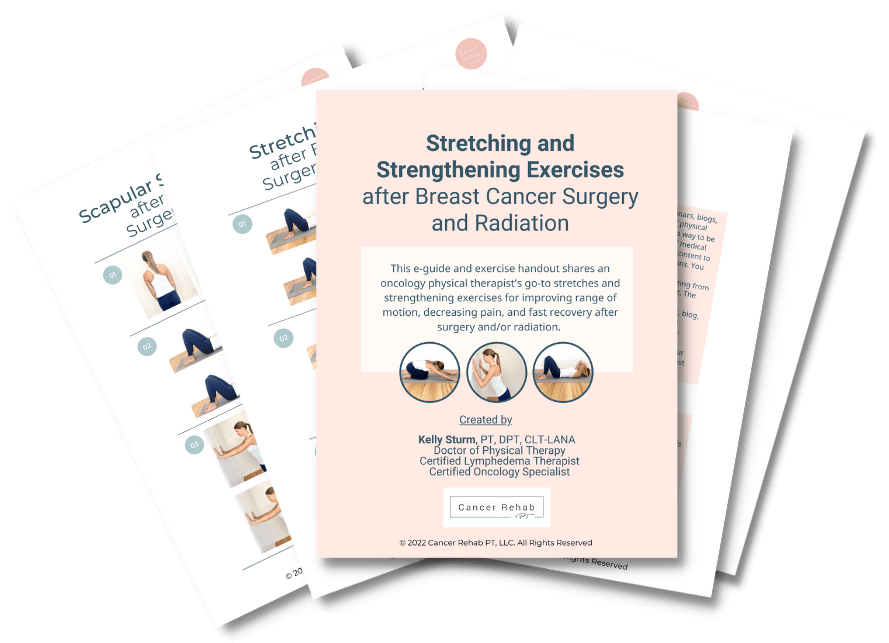


If your chest, shoulder, or arm feels tight after treatment, physical therapy stretches after breast cancer can make a big difference in how you move and feel.
Surgery and radiation change the tissue around your chest and shoulder, but gentle stretching helps you get your motion and comfort back.
As an oncology physical therapist, I guide people through this kind of recovery at the clinic. Below are five of the stretches I use most often with my patients, along with simple, step-by-step instructions so you can try them at home.
If you’d like more guided support, you’ll find full routines and education inside my program, Breast Cancer Rehab.
Why Are Stretches After Breast Cancer Important?
Breast cancer treatment takes a toll on the muscles and tissue around your chest and shoulder, and gentle stretching is one of the best ways to regain the movement and comfort you may have lost.
Stretching after breast cancer surgery or treatment helps you to:
- Restore the shoulder and arm motion you need for everyday tasks like washing your hair or getting dressed
- Ease chest tightness and pulling that often follow surgery and radiation
- Reduce shoulder pain and stiffness caused by guarding and protecting the area
- Keep the tissue mobile and limit scarring and the thickening that radiation can cause
- Support your lymphatic system, which can lower your risk of lymphedema
To understand why this happens, it helps to know which muscles are affected.
Treatment mainly involves the pectoralis major, pectoralis minor, and latissimus dorsi. For some people, these muscles are partly or fully removed during surgery or reconstruction. Radiation can also affect them, causing radiation fibrosis, which is a thickening and scarring of the tissue.
On top of that, these muscles tend to tighten when we guard and protect the area or slip into poor posture, like rounding the shoulders and jutting the head forward while looking at a computer or phone.
Stretching gently counteracts all of this and helps you stand taller and move more freely.
Learn more in my Breast Cancer Recovery Roadmap.
My Top Stretches after Breast Cancer Surgery or Radiation as an Oncology PT
These are the same stretches I give my patients in the physical therapy clinic. They’re gentle, easy to do at home, and effective for easing tightness while restoring your shoulder and chest motion.
A few things to keep in mind as you go:
- Move slowly and only stretch until you feel a mild pull, never pain
- Breathe deeply into each stretch and relax a little further with every exhale
- Ease back or stop if anything hurts, and check with your care team before starting if you’re newly out of surgery
You can follow along with the video below and use the step-by-step instructions for each stretch underneath.
1. Chest Stretch with Bent Elbows
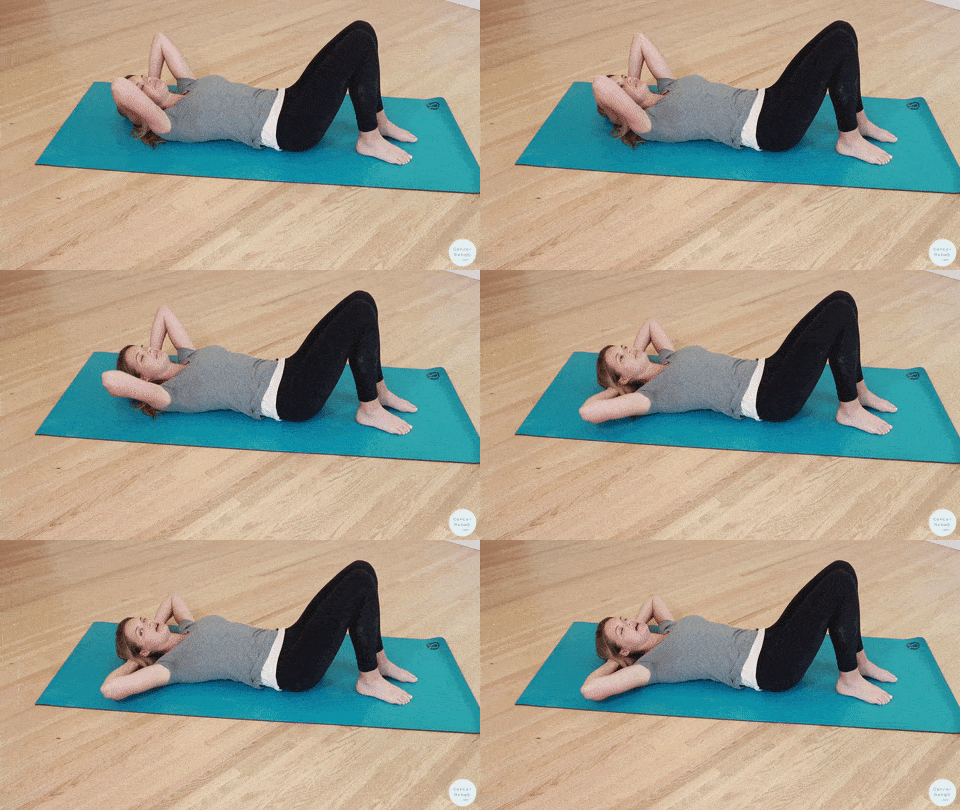
This stretch gently opens up the pectoralis muscles across your chest and eases the tightness and pulling that often follow surgery. It’s a great one to begin with because you’re fully supported on your back the whole time!
What you’ll need: Floor space or a bed.
- Lie on your back with your knees bent for low back support.
- Place your hands behind your head and point your elbows straight up toward the ceiling.
- Slowly let your elbows fall open toward the sides, stopping when you feel a mild stretch. If you feel pain, bring your elbows back together slightly.
- Take a deep breath and let your chest expand. As you breathe out, relax a little further into the stretch and hold for 5 to 10 seconds.
- Bring your elbows back up toward the ceiling to return to the start.
2. Shoulder Raise with a Wand

This stretch rebuilds the overhead motion you need for everyday tasks like washing your hair, getting dressed, or reaching into a cupboard. Using a wand lets your stronger arm gently guide your treated side through the movement.
What you’ll need: A dowel (a broomstick, PVC pipe, golf club, or cane all work great).
- Lie on your back with your knees bent, holding the dowel down by your hips.
- Grip the dowel with your palms facing down and your hands about shoulder-width apart.
- Slowly raise the dowel up and over your head, stopping when you feel a mild stretch. If you feel pain, lower it an inch or two until the pain is gone.
- Take a deep breath and let your chest expand. As you breathe out, relax a little further and hold for 5 to 10 seconds.
- Lower the dowel back down to your hips to return to the start.
3. Table Slides
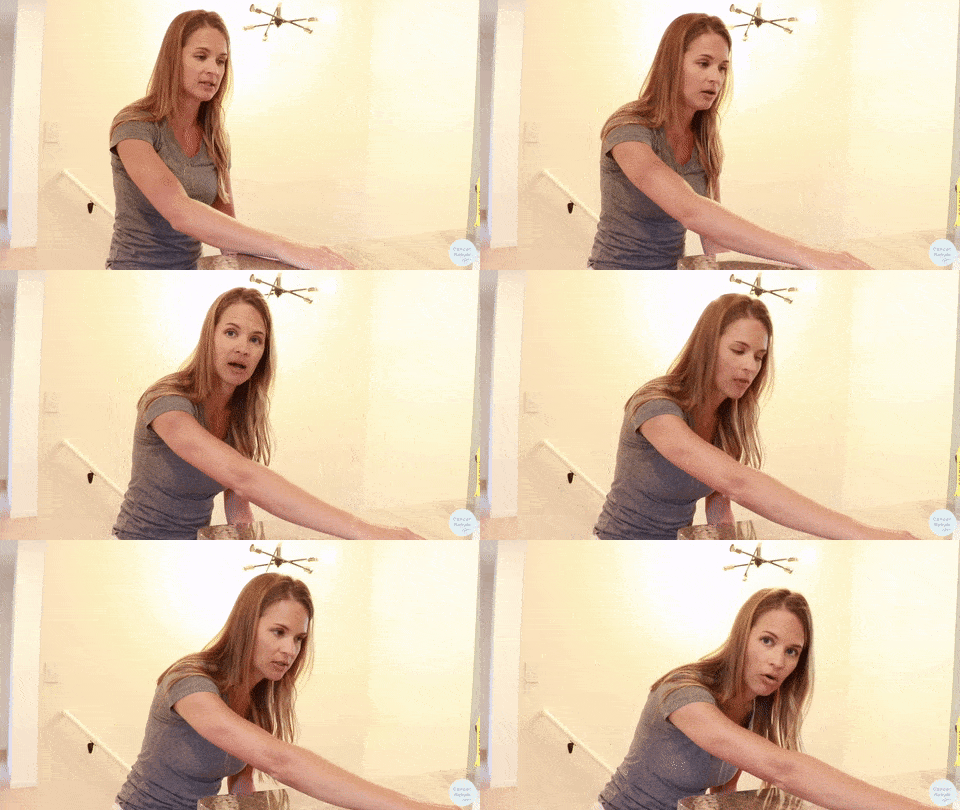
This stretch works on the same overhead shoulder motion as the wand exercise, but you do it sitting up. It’s a great option if getting down to the floor is uncomfortable or difficult for you.
What you’ll need: A table or countertop and a chair. Optional: a hand towel.
- Sit in a chair facing the table, with your hand resting flat on the surface or on a towel. The farther back you sit, the bigger the stretch you’ll get.
- Slowly lean your body forward, sliding your hand or the towel across the table.
- Go until you feel a mild stretch, but stop before any pain.
- Take a deep breath, and as you breathe out, relax a little further into the stretch and hold for 5 to 10 seconds.
- Sit back upright to return to the start.
Repeat 3 to 5 times, or as needed.
4. Sidelying Chest Stretch with Rotation

This stretch adds a gentle rotation to open the chest more. It’s a wonderful way to keep your shoulder motion and posture during and after radiation therapy.
What you’ll need: Floor space or a bed.
- Lie on the side opposite the one you want to stretch. To stretch your right chest, lie on your left side.
- Bend your knees slightly and stack your legs on top of each other.
- Place your top hand behind your head and point that elbow in front of you, toward the far side of the room. Rest your bottom arm wherever it’s comfortable.
- Slowly rotate your top elbow open, as if pointing it toward the wall behind you. Let your head and upper body follow, but keep your legs still.
- Stop when you feel a mild stretch, and ease back if you feel any pain.
- Take a deep breath and let your chest expand. As you breathe out, relax a little further and hold for 5 to 10 seconds.
- Rotate back to the starting position with your elbow pointing in front of you.
5. Chest Stretch with a Foam Roller
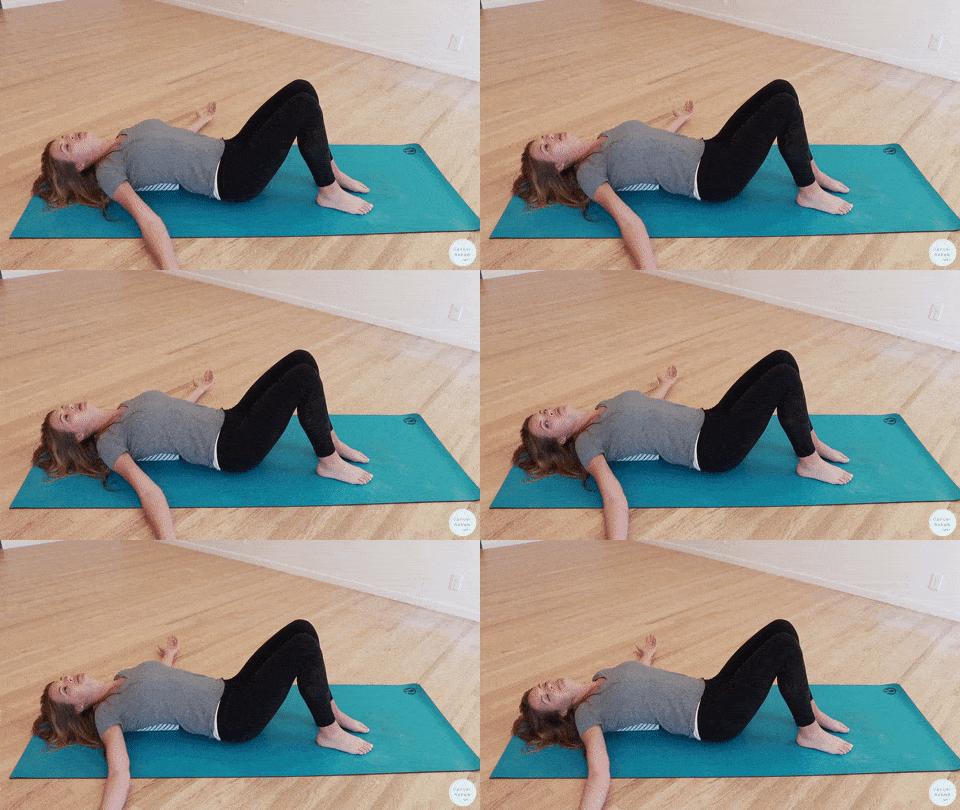
This stretch is a favorite of mine for opening the chest and improving posture. Lying along the roller lets gravity gently draw your shoulders open, so go slow and enjoy it.
What you’ll need: Floor space, a long foam roller, and a long rolled towel.
- Sit on one end of the foam roller and carefully lie back so it runs vertically along your spine, with your head supported on the end.
- Keep your knees bent and slightly wide for low back support and balance.
- Straighten your arms down by your sides with your palms facing up, and let them relax toward the floor. Your chest should open, and your shoulders should fall out to the sides.
- Take a breath here and relax into the stretch.
- Slowly raise your arms toward shoulder or head height for more of a stretch, keeping them relaxed and open toward the floor. Stop when you feel a mild stretch.
- Take a deep breath and let your chest expand. As you breathe out, relax a little further and hold for 10 to 30 seconds, or as long as feels good.
Repeat 2 to 3 times.
FAQs
When can I start stretching after breast cancer surgery?
It depends on your surgery and how you’re healing, so always check with your surgeon or care team first. That said, many people can begin gentle movement within a few weeks, but your timeline is unique to you. Once you’re cleared, start slow and stick to mild, pain-free stretching.
How often should I do stretches after breast cancer surgery or treatment?
Most of my patients do well stretching once or twice a day, holding each one gently and staying within a mild, comfortable range. Ultimately, the most important thing during breast cancer recovery is consistency with your rehab, so try doing a little every day or every other day. That said, if a stretch ever causes you pain, ease off and check in with your care team.
Can stretching help with cording after breast cancer?
Yes, gentle stretching can help with cording, or the Axillary Web Syndrome, which is the tight, rope-like feeling that sometimes develops under the arm after surgery. Consistent and careful movement often eases it over time.
If cording is limiting your motion or causing pain, you can also find physical therapy arm movements and exercises to help with it in my program, Breast Cancer Rehab.
Will these stretches help prevent lymphedema?
Stretching and regular movement support your lymphatic system, which is one piece of lowering your lymphedema risk. They’re not a guarantee on their own, but staying mobile is a helpful habit. If you notice swelling, heaviness, or tightness, reach out to your care team so you can get ahead of it early since lymphedema is much easier to manage in its earlier stages.
Learn more about how to prevent lymphedema.
More Support for Breast Cancer Recovery
As an oncology PT, I believe that breast cancer rehab and physical therapy should be accessible to everyone, not just the people who can make it to a clinic.
That’s why I’ve created a library of online resources you can use from home, at a fraction of the cost of in-person physical therapy.
My program, Breast Cancer Rehab, walks you through education, exercises, and recovery strategies for everything from shoulder motion and chest tightness to cording, scar tissue, and lymphedema.
If you’d rather start with more step-by-step exercises for breast cancer rehab, I also have more step-by-step physical therapy guides: